
If you’ve ever heard the phrase ‘cardinal gems’ and wondered what this means, now’s your chance to find out. Gem-A Gemmology Tutor Pat Daly breaks down this historic term and explains how the concept has stood the test of time.
The term ‘cardinal gems’ may be used to spotlight five stones – diamond, ruby, sapphire, emerald and amethyst – on the grounds that they had a special significance, preciousness and value in classical Roman, Greek, Egyptian and Mesopotamian cultures. It is little used term today but has been revived to some extent for jewellery promotions.
Fine quality gemstones are rare and were rarer still 1,500 years and more ago. This accounts for the inclusion of amethyst, which, despite its beauty, is not currently listed among the most valuable of gemstones.
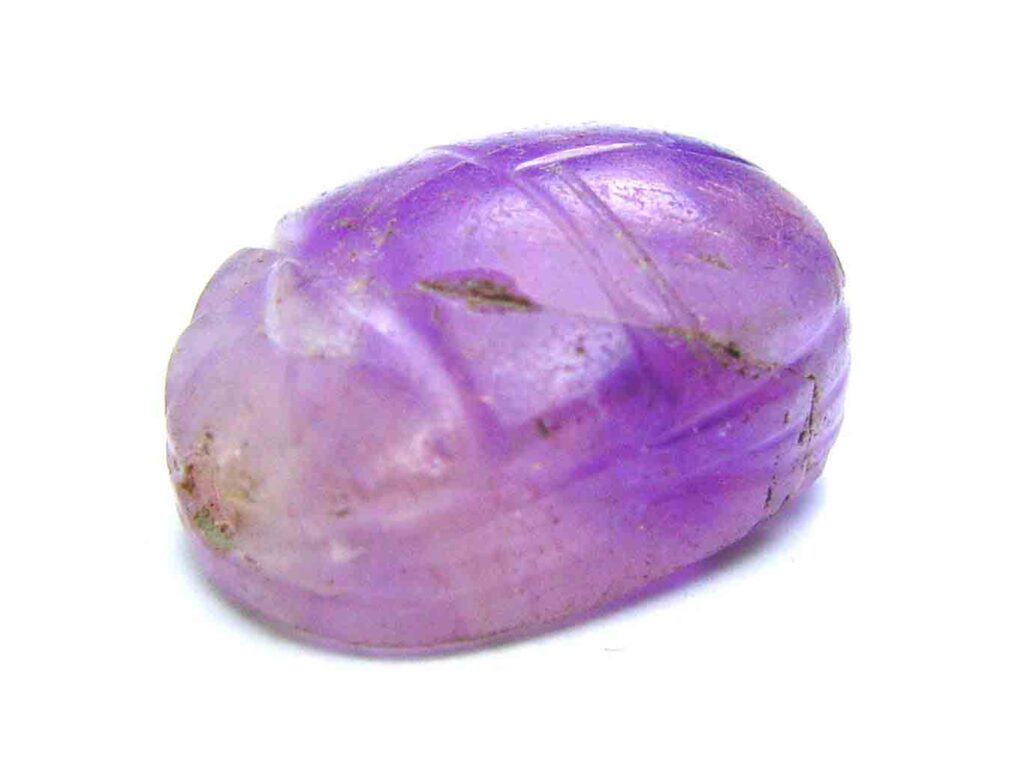
A carved amethyst in the shape of a scarab beetle, from the Gem-A Archives.
Amethyst has an almost unrivalled purple colour. The wearing of purple symbolised high status in several cultures, including the Roman Republic and Empire. In the Middle Ages, it was used by the Christian church and was set in the rings of Catholic bishops, because of its associations with fidelity and celibacy. It has also been mythologised as a protection against drunkenness and addiction, helping to keep the mind sharp for business dealings.
Of course, magical properties have been attributed to most gem varieties from ancient times to the present day. They are said, variously, to attract good fortune, prevent accidents and protect from evil, and some were used for medicinal purposes. Diamonds, because of their hardness and clarity, were believed to protect soldiers and to represent purity. Blue sapphire had royal and ecclesiastical connections and, with emerald, was supposed to protect the home and guard against poison.
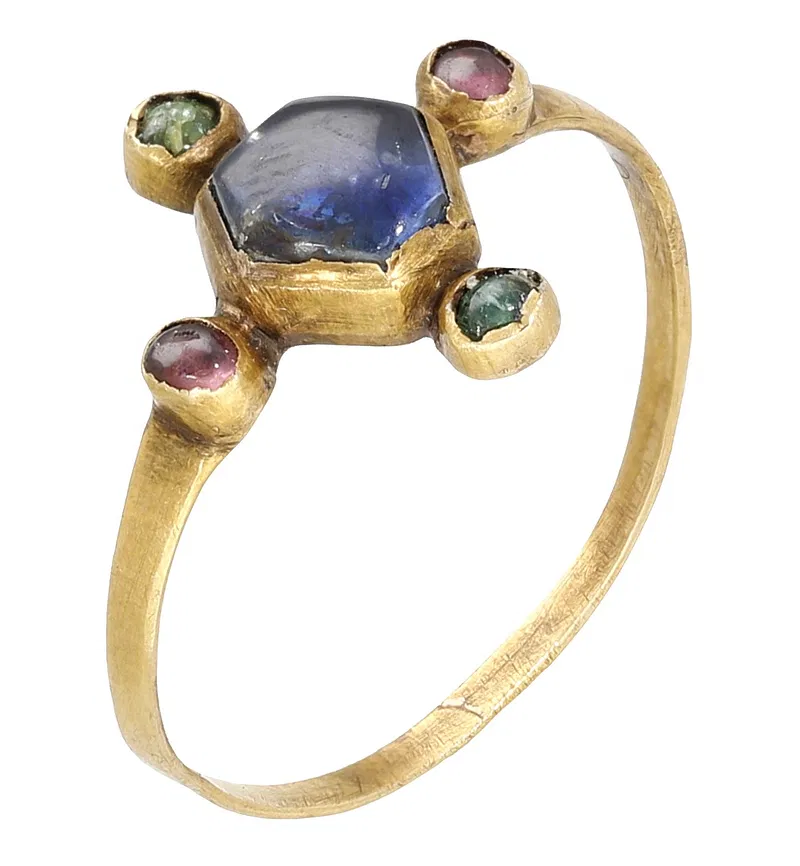
A rare gem-set Medieval Bishop’s ring, late 12th/early 13th century with a central hexagonal sapphire. Sold at auction by Noonans in Mayfair, London.
Ancient beliefs about the virtues of gem materials are far from proven, and we are advised not to put them to the test at home! There are also problems associated with historic descriptions. A specific turn of phrase or gem variety name may suggest a material is something we recognise today, but this isn’t necessarily the case. Gemmologists are reluctant to try to identify a stone unless they are able to test it thoroughly.
All the historically significant ‘Cardinal Gems’ feature in our GemIntro course, which can be studied online and at your own pace. Discover more about our Ofqual Level 2 qualification here: https://gemintro.gem-a.com/.
……………………………………………………………………………
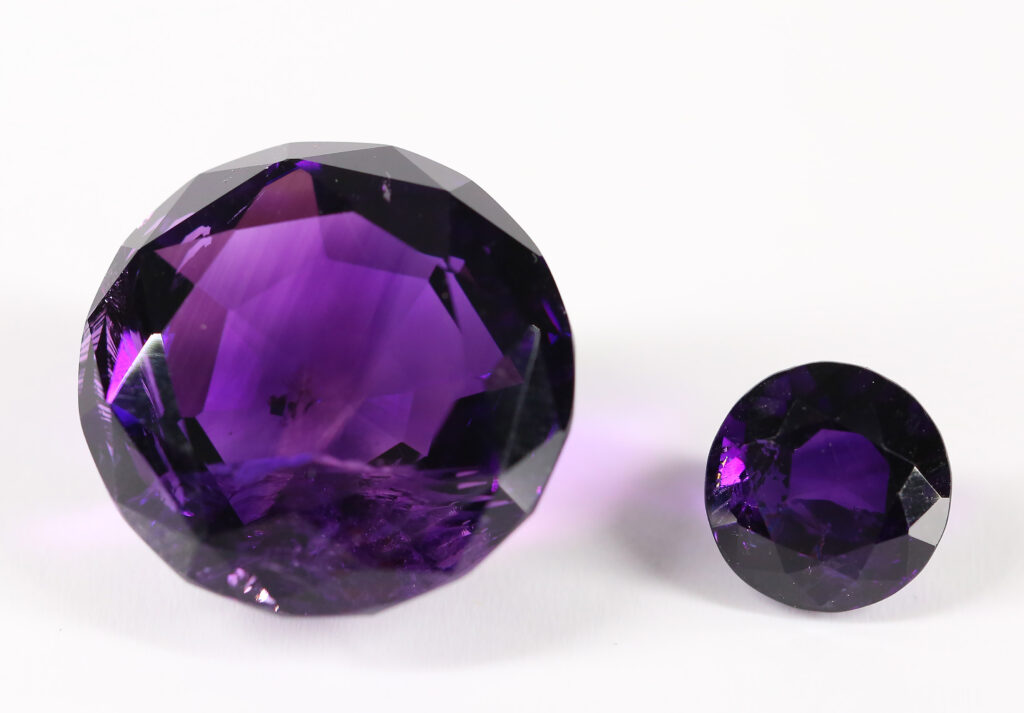
Main image: Amethyst from Zambia, photographed by Henry Mesa.
If you would like to learn more about Gemmology, you can sign up for our short online course GemIntro or explore our accredited programmes.